

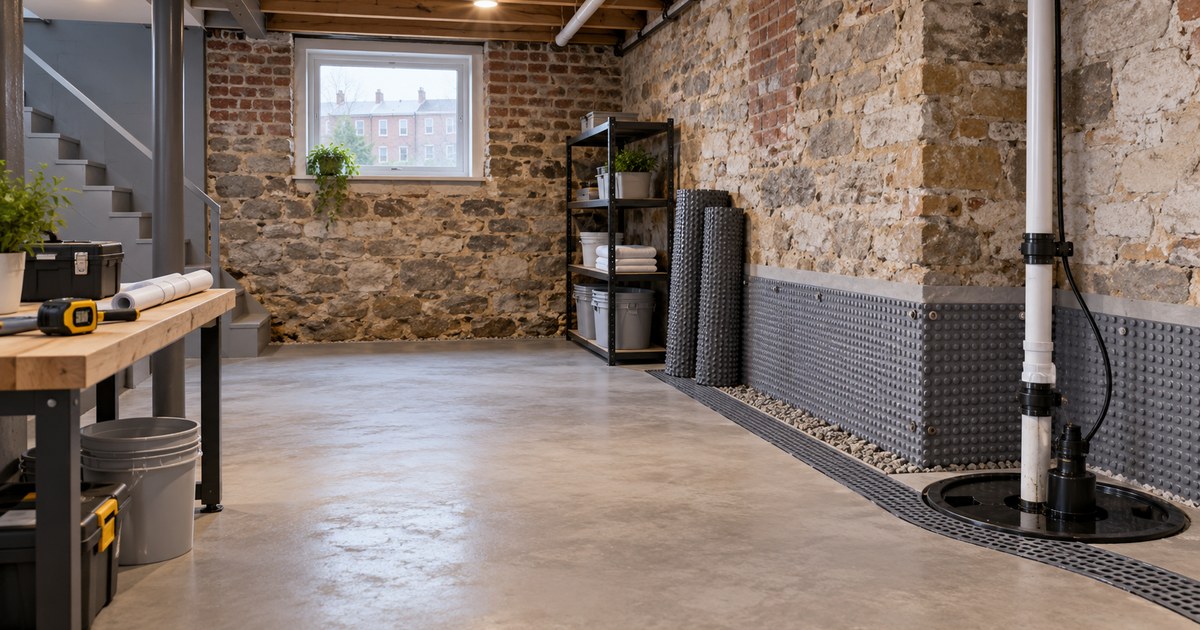
A wet basement can begin with a small water stain, a damp odor, or moisture appearing along one wall after heavy rain. Over time, the same condition may affect stored belongings, finished surfaces, masonry, wood components, and the way the basement can be used.
The difficulty is that water does not always enter where it becomes visible. It may move through a foundation crack, masonry joint, window opening, wall penetration, or the joint between the basement wall and floor. Water can also travel behind finished surfaces or across the floor before collecting in an obvious location.
For that reason, effective basement waterproofing should begin by identifying the likely source and pathway of the water.
Common Reasons Basements Become Wet
Rainwater and groundwater can reach a basement in several ways.
Improper grading may direct surface water toward the home instead of away from it. Clogged gutters or poorly positioned downspouts can release roof runoff near the foundation. Saturated soil may increase pressure around basement walls and beneath the floor. Cracks, mortar joints, penetrations, and vulnerable wall-and-floor connections may then provide pathways into the basement.
Plumbing leaks, window wells, damaged exterior drainage, and condensation can create similar symptoms. More than one condition may also be present at the same property.
A coating or patch may temporarily cover one visible area without addressing water that continues to collect elsewhere. Understanding the source helps avoid choosing a repair based only on the location of a puddle.
Signs That Deserve Attention
Homeowners should consider having a basement evaluated when they notice:
- Water after rainstorms
- Damp basement walls or floors
- Recurring moisture around the floor perimeter
- Water entering through cracks
- White mineral deposits on masonry
- Peeling paint or bubbling finishes
- Musty odors
- Persistent humidity
- Water stains
- Mold or mildew associated with moisture
- Rust around basement components
- A sump pump that runs frequently
- A sump pump that cannot keep up during storms
- Water entering around basement windows
- Previous basement flooding
Photographs and notes can help document when the condition occurs. Record whether it appears during heavy rain, after snowmelt, during humid weather, or when a particular plumbing fixture is used.
Why Philadelphia Properties Require Individual Solutions
Philadelphia contains many types of residential construction, including row homes, stone foundations, brick masonry, concrete block walls, finished basements, additions, and properties with limited exterior access.
Older masonry deserves careful evaluation. Stone, brick, block, mortar, coatings, and previous repairs can all affect how moisture moves through a wall. An approach suitable for a newer poured-concrete basement may not be appropriate for an older stone foundation.
Exterior access can also be restricted by neighboring buildings, sidewalks, driveways, utilities, or narrow property lines. These conditions may influence whether an interior drainage method, exterior repair, targeted crack repair, or combination of measures is appropriate.
Possible Waterproofing and Drainage Methods
Depending on the property, recommendations may include:
- Targeted leak repair
- Foundation-crack repair
- Interior perimeter drainage
- French-drain installation
- Sump-pump installation or replacement
- Basement-wall waterproofing
- Exterior foundation waterproofing
- Window-well improvements
- Surface-drainage corrections
- Moisture-management measures
- Structural repair when foundation movement is involved
Not every wet basement in Philadelphia needs every component. A sump pump may help manage collected groundwater, but it will not correct every wall leak or exterior drainage problem. A surface coating may improve one area without relieving water pressure beneath the floor. The repair should fit the source, construction, and conditions of the property.
What to Expect From an Evaluation
A useful basement evaluation should examine where the water appears, when it occurs, how the property drains, and whether cracks or structural movement are involved.
Homeowners may want to ask:
- What is the likely source of the water?
- How is the water reaching the basement?
- Is this a drainage, waterproofing, structural, or plumbing concern?
- Why is the proposed method appropriate?
- How will collected water be discharged?
- What areas are included in the work?
- What maintenance will the completed system require?
- Are there electrical, plumbing, access, or permitting considerations?
Philadelphia Foundation Repair & Basement Waterproofing provides information and services related to leaking basements, wet walls and floors, foundation cracks, drainage concerns, groundwater intrusion, and recurring moisture. The company’s public approach begins with identifying the water source before recommending an appropriate repair.
The goal should be a clear explanation and a solution suited to the property, not the same waterproofing package for every basement.