


Your Inbox Deserves Better: The Case for a Free Temporary Email Address

Finding the right free temporary email address depends on your specific needs, whether you require a quick verification or long-term privacy protection. Most high-quality services fall into these categories:
- Short-Term Burners: Ideal for quick verifications (10-60 minutes).
- General Use Inboxes: Good for browsing and one-off signups (~24 hours).
- Developer Tools: Built for QA, load testing, and API integration.
- Permanent Aliases: Best for long-term management and forwarding.
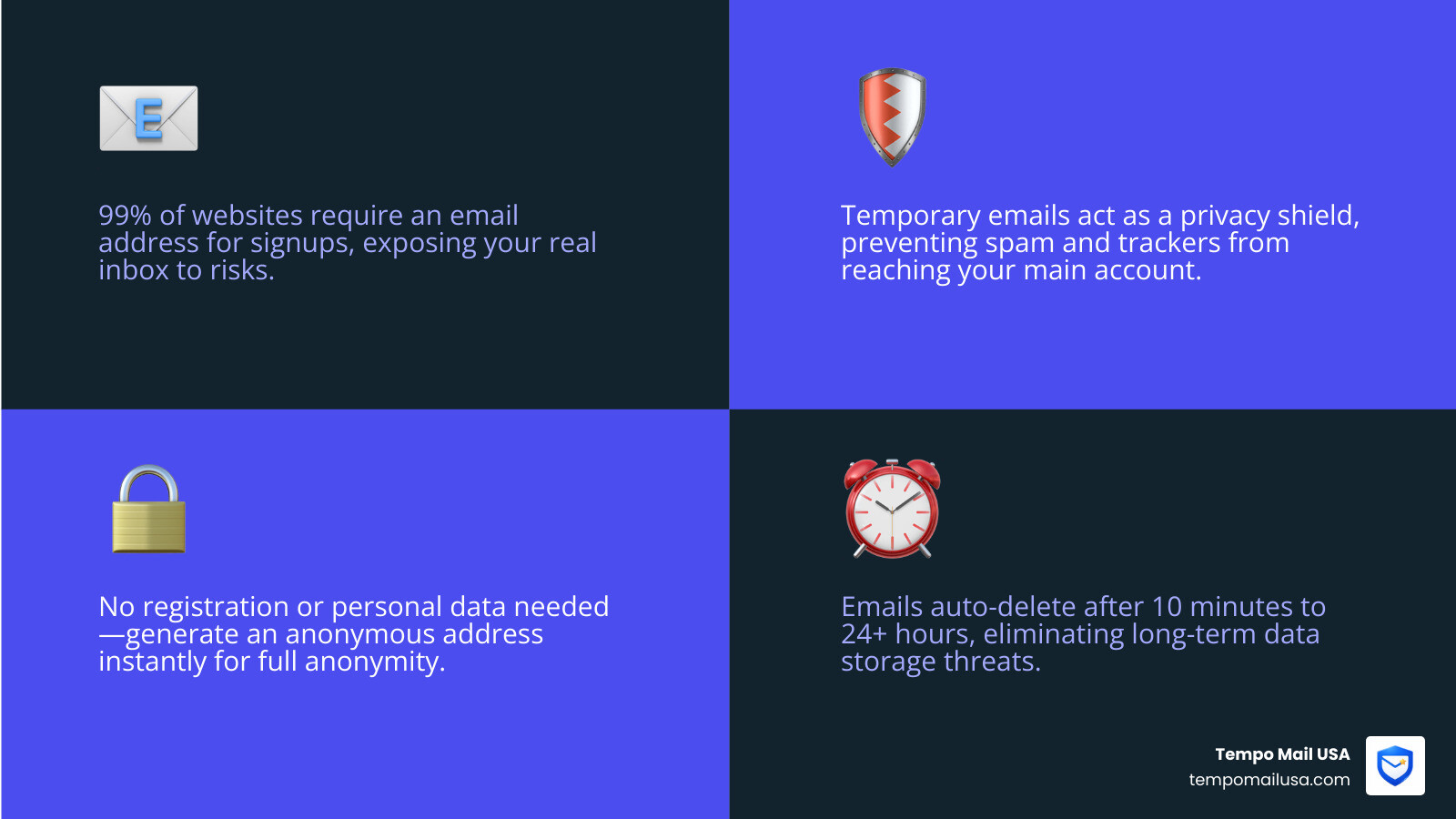
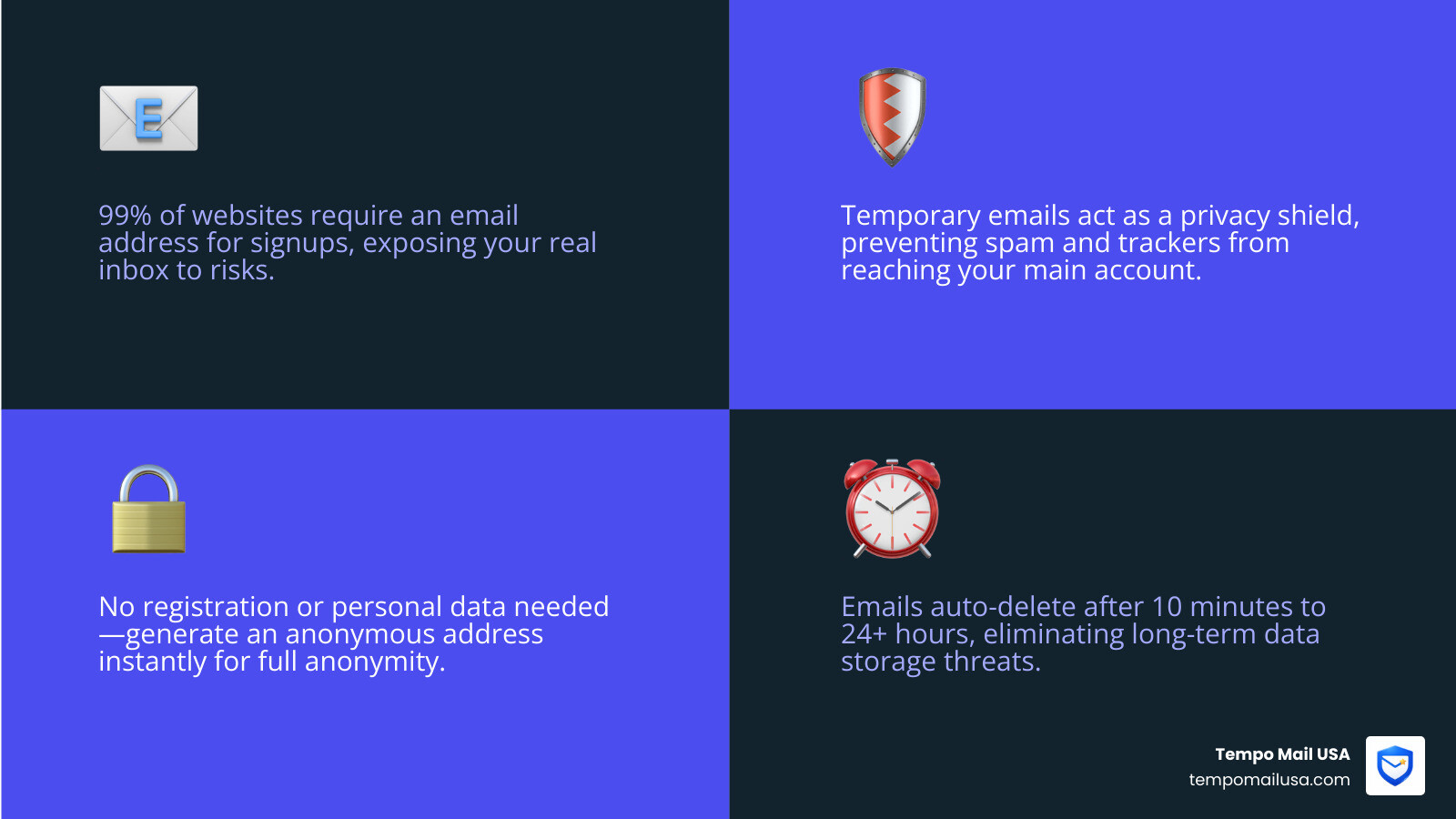
Nearly 99% of apps and websites ask for your email before you can do anything useful. That means your real address ends up in dozens — sometimes hundreds — of databases you never fully trusted.
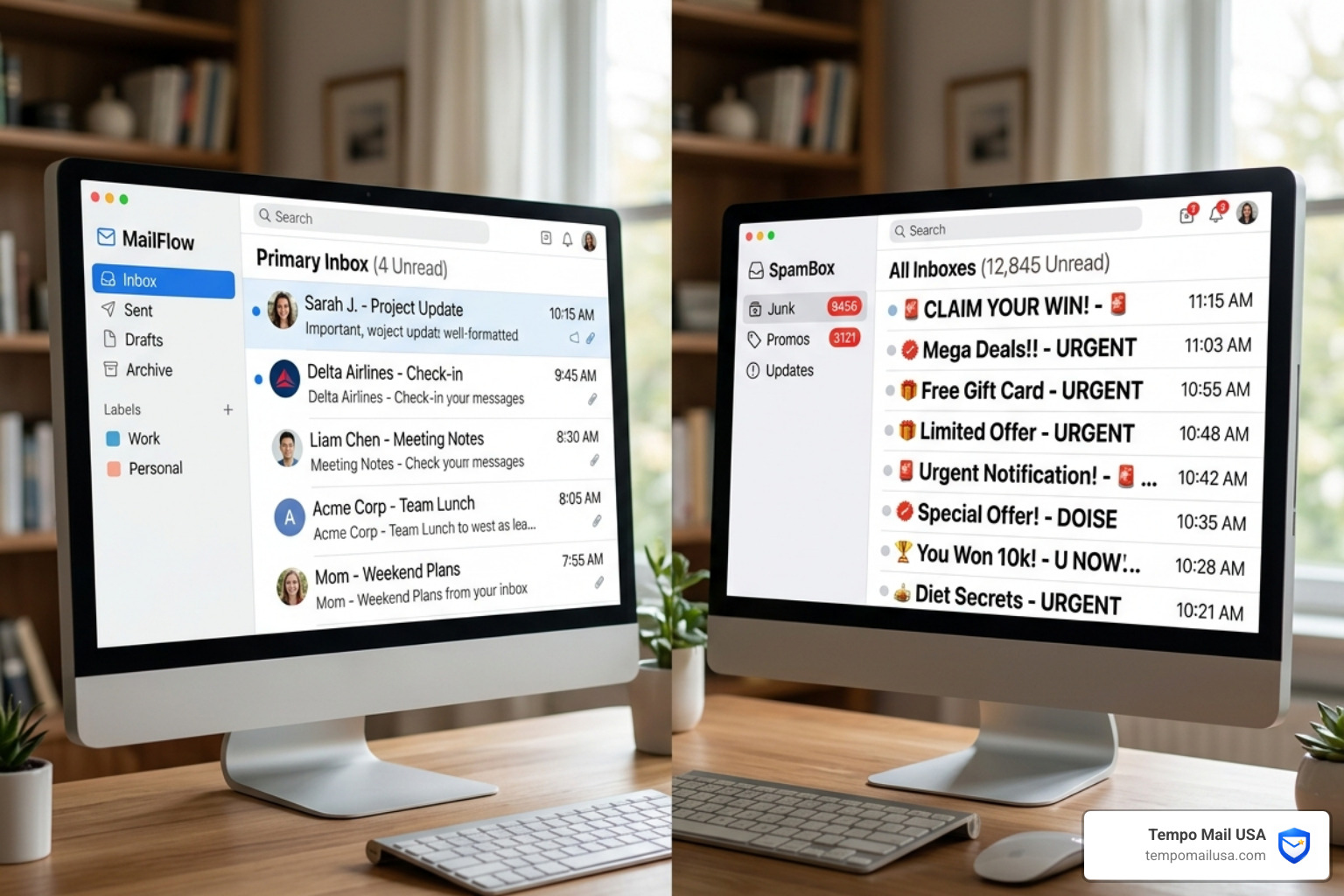
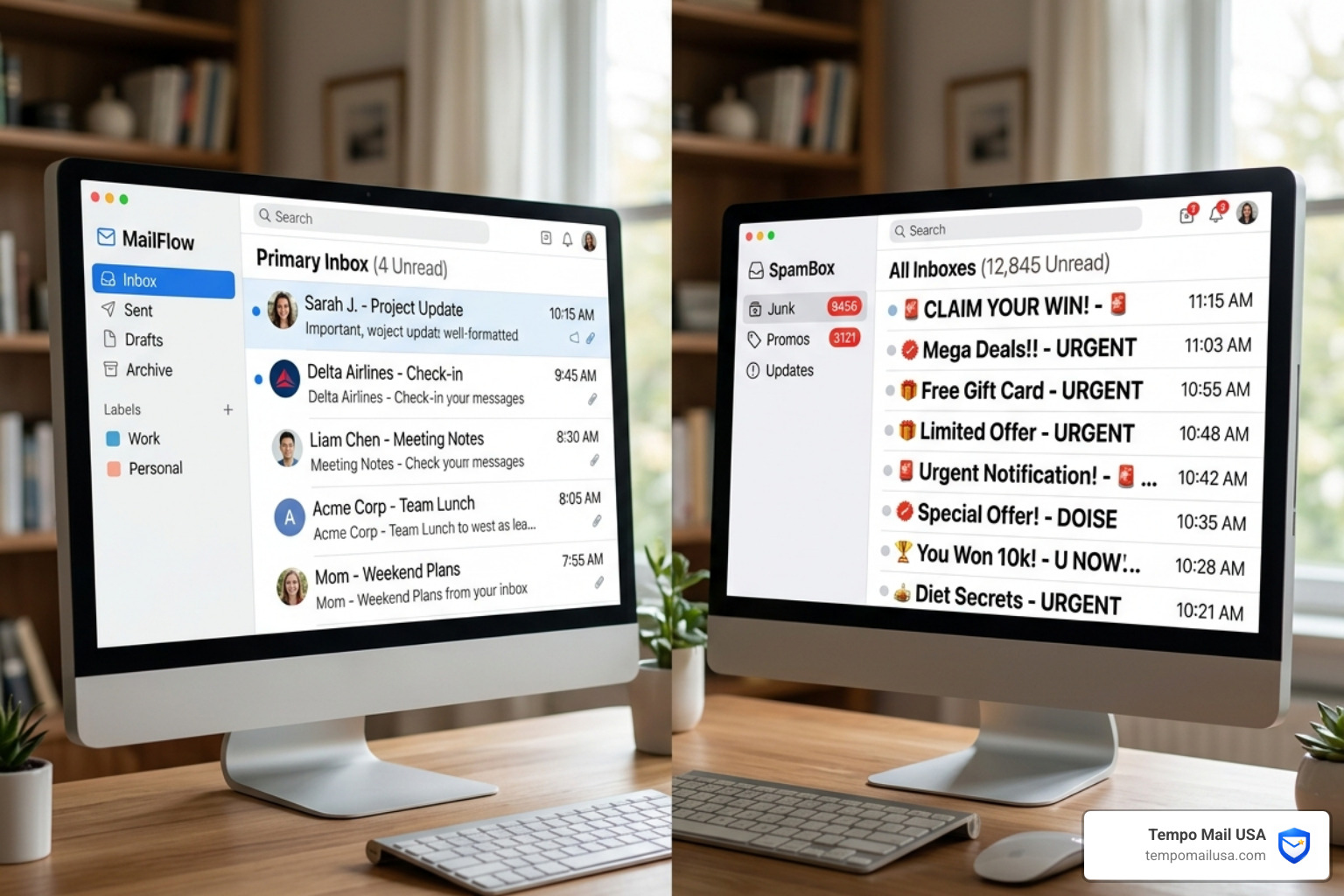
The result? Spam. Phishing attempts. Data brokers selling your info. Trackers following you across the web.
A disposable email address breaks that chain entirely.
It acts as a buffer between your real identity and whatever site is asking for your information. Use it once, get your verification code or free trial access, and walk away — no strings attached.
What is a Free Temporary Email Address and How Does It Work?
At its core, a free temporary email address is a short-lived, anonymous inbox created on the fly. Unlike your primary Gmail or Outlook account, which is tied to your phone number and real name, a temporary address requires no registration. You don’t need to provide a password, a recovery email, or any PII (Personally Identifiable Information).
If you are curious about the mechanics, you can learn to create one today. Most services work through a simple web interface. When you visit the site, it automatically generates a random address like [email protected]. Any mail sent to that address appears in an inbox on your screen in real-time.
These services often use “memory-only” storage, meaning the emails are never even written to a hard drive. They exist only in the server’s active memory until the timer runs out. Many providers also offer “session-locked” privacy, ensuring that only you-from your specific browser session-can see the messages in that inbox. Once you close the tab or the timer expires, the address and all its contents are purged. It is the digital equivalent of a self-shredding letter. If you want broader background on the concept, Wikipedia’s overview of disposable email addresses is a helpful external reference.
Why You Need a Disposable Email for Privacy in 2026
There are several critical reasons to integrate these tools into your daily browsing:
- Stopping Spam at the Source: The most effective way to keep a clean inbox is to never give your real address to untrusted sites. You can stop spam emails by using a burner for one-off registrations.
- Protection Against Data Leaks: If a site you signed up for in 2024 gets hacked in 2026, and you used a temporary address, your real identity remains safe. You can stop data leaks and phishing in seconds by ensuring your primary email isn’t in their database.
- Bypassing Gated Content: Want to download a whitepaper or grab a 10% discount code without joining a permanent marketing list? A temporary address gets you the goods without the commitment.
- Extending Free Trials: Many services offer 7-day trials. Using a disposable address allows you to test platforms thoroughly before committing your real credentials.
- Defeating Marketing Trackers: Professional marketing emails often contain invisible “pixels” that notify the sender when, where, and on what device you opened the email. Many temporary services strip these trackers out, offering essential benefits for your digital anonymity.
Key Features to Look for in a free temporary email address
Not all temporary email services are created equal. Depending on whether you’re signing up for a forum or testing a complex web application, you’ll want to look for specific features. Understanding why you should use disposable addresses often comes down to the utility they provide.
- Custom Domains: Some websites block common temp-mail domains. High-quality services rotate their domains frequently or allow you to choose from a list of “fresh” domains.
- Attachment Support: While many burners only show text, some allow you to view or download attachments (usually up to 10MB).
- Browser Extensions & Apps: For frequent users, having a Chrome extension or a mobile app makes it easy to generate an address without leaving the page you’re on.
- No Registration: The hallmark of a true temp service is that you never have to sign up to use it.
Short-Lived vs. Permanent free temporary email address Options
Choosing the right lifespan is crucial. If you’re just grabbing a verification code, a 10-minute mailer is perfect. But if you expect a follow-up email in three days, you’ll need something more robust.
FeatureShort-Lived (10-60 min)Long-Term / Permanent AliasPrivacyHigh (Self-destructs)Medium (Forwarding logs)PersistenceNoneHigh (Always active)Best ForVerification codesNewsletters, shoppingRecoveryImpossiblePossible via primary email
Some services offer a 12-hour retention policy, which is a great middle ground for registrations that require a manual “approval” from a human moderator. On the other end of the spectrum, “Permanent Aliases” allow you to create an address that lasts forever and forwards mail to your real inbox. You can “turn off” the alias whenever the spam becomes too much.
How to Choose a free temporary email address for App Testing
For developers and QA professionals, a standard web-based inbox isn’t enough. You need infrastructure. When looking for a provider for testing, consult a guide to top temporary email providers that specifically mentions developer tools.
Key features for testing include:
- API Access: The ability to programmatically fetch emails to verify that your app’s “Welcome” or “Reset Password” flow is working.
- Webhooks: Automatically pushing incoming emails to your own server for processing.
- Trillions of Inboxes: Advanced platforms offer a “catch-all” system where any name you think of at their domain instantly becomes a valid inbox, allowing for massive load testing.
- SMS Testing: Some enterprise-grade temp services now offer virtual phone numbers to test 2FA (Two-Factor Authentication) workflows.
Risks and Limitations of Using Disposable Mail
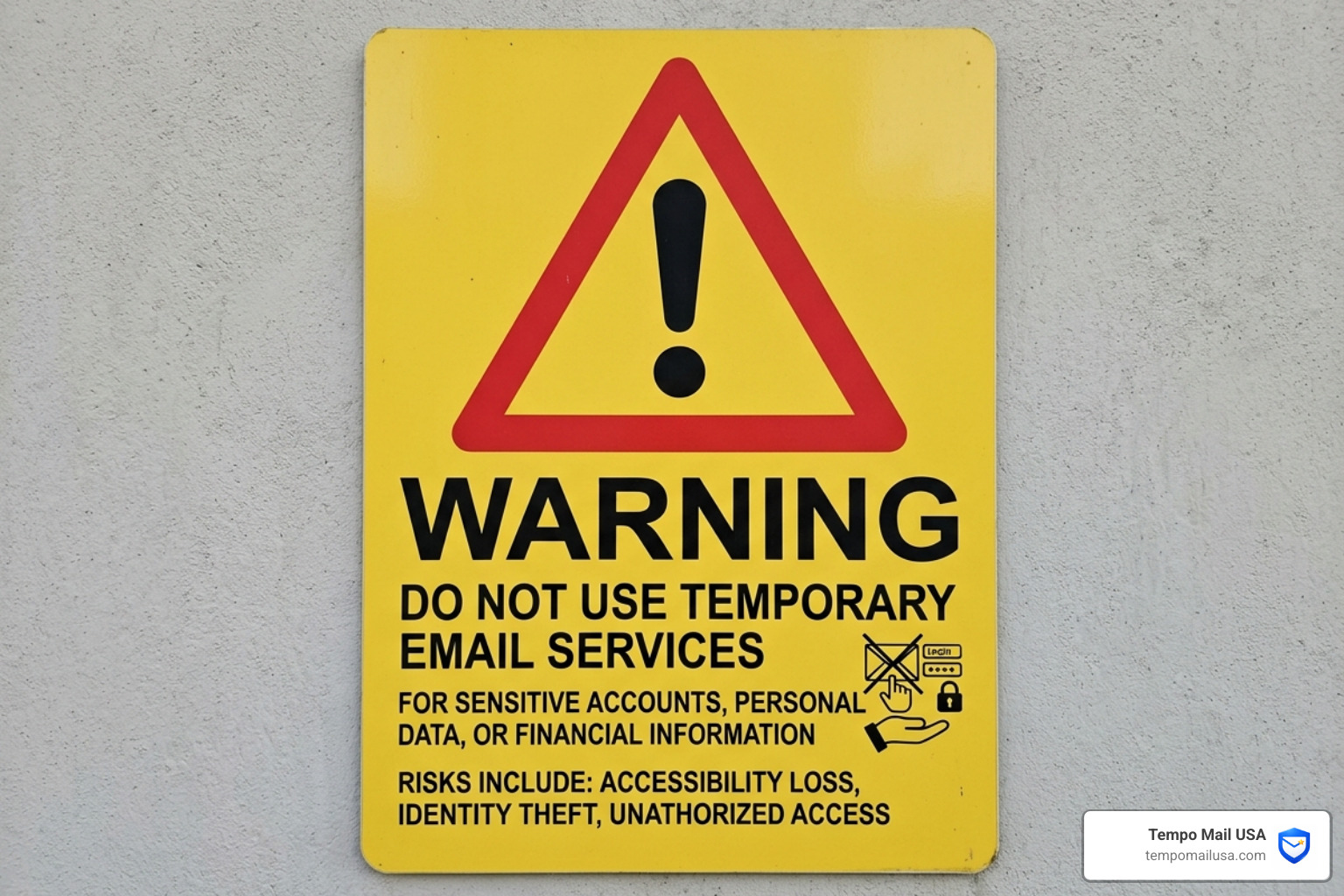
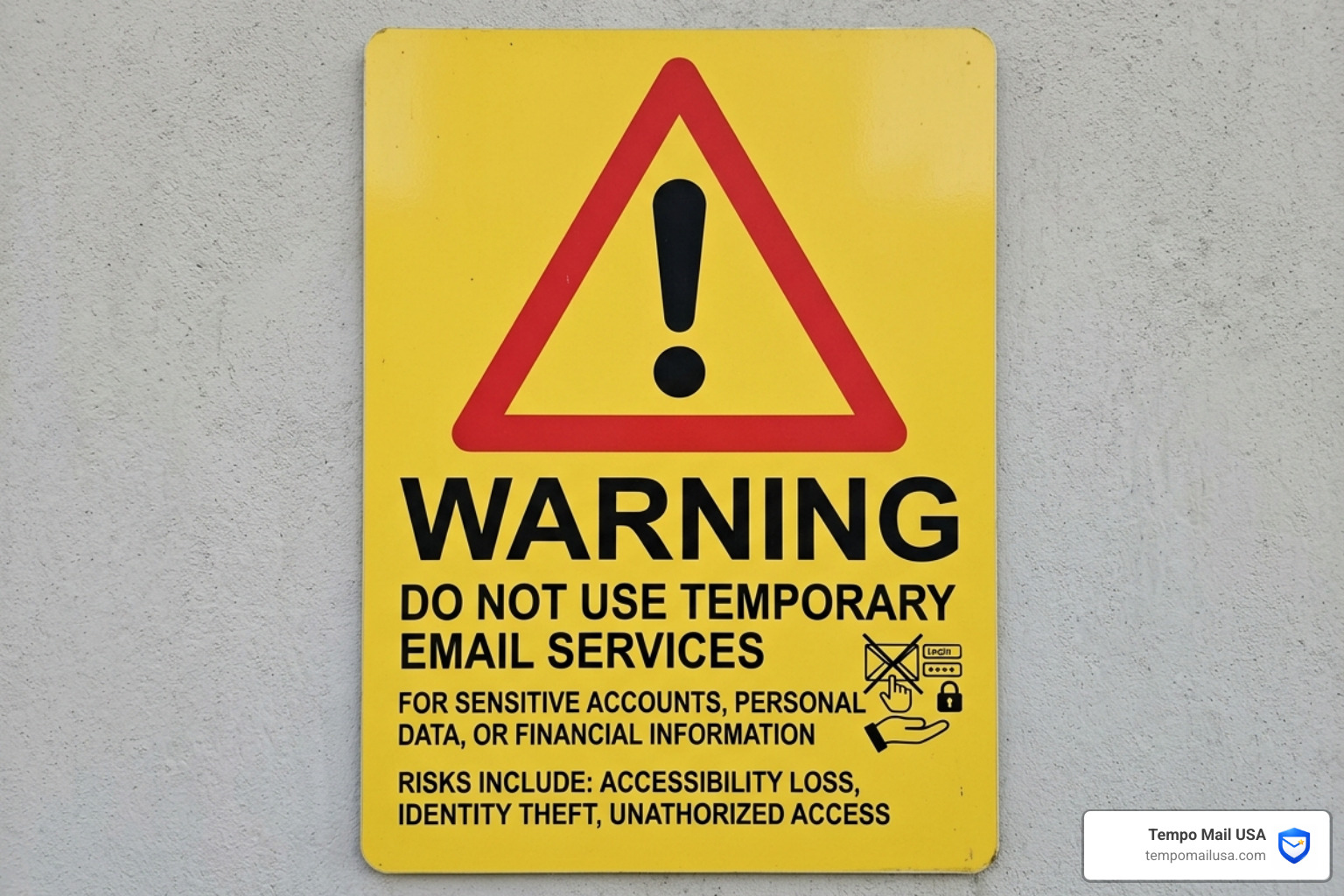
While we love the privacy benefits, a free temporary email address isn’t a silver bullet for every situation. You must use handling tips for secure online use to avoid losing access to important accounts.
1. Public Access Risks Most free temporary inboxes are public. If you use a common, publicly accessible address, anyone else who types that same address can see your messages. Never use a public temp mail for anything involving sensitive data, banking, or cryptocurrency.
2. Domain Blocking Because these services are often used to bypass trials, many major platforms (like Netflix or some banking apps) maintain “blacklists” of known temporary email domains. If a site tells you “Please enter a valid email address,” it has likely detected your temp provider.
3. Receive-Only Limitations To prevent their servers from being used by actual spammers, almost all free temporary services are “receive-only.” You cannot use them to send an email, only to view what comes in.
4. No Recovery If you sign up for a service you plan to use for years (like a primary social media account) with a 10-minute email, you will be locked out the moment you need to reset your password.
Common sites that often block temporary mail:
- Major Streaming Services (Netflix, Disney+)
- Financial Institutions & Fintech Apps
- High-Security Government Portals
- Some E-commerce giants during checkout
Frequently Asked Questions about Temporary Email
How long do temporary emails typically last?
It varies by provider. The most common “burner” addresses last between 10 minutes and 2 hours. However, some services keep the inbox active for 24 hours or as long as your browser tab remains open. Specialized services delete messages periodically throughout the day to ensure privacy.
Can you send emails from a temporary address?
Usually, no. Most free providers disable sending capabilities to prevent their domains from being flagged as spam sources. However, premium alias services do allow you to “reply” to forwarded emails, masking your real address while still allowing two-way communication.
Are temporary emails legal and safe to use?
Yes, using a free temporary email address is completely legal. It is a privacy tool, much like a PO Box or a VPN. As for safety, they are very safe for receiving non-sensitive information. Because they don’t store your personal data, there is no “account” for a hacker to break into. Just remember that public inboxes can be viewed by others, so keep it for low-stakes signups only.
Conclusion
In an era where your data is the most valuable commodity on earth, protecting your primary inbox is an act of digital self-defense. Whether you are a developer testing a new app, a shopper looking for a one-time discount, or simply someone tired of a cluttered inbox, a free temporary email address is your best friend.
At Tempo Mail USA, we believe in providing a secure identity proxy. We act as a firewall between the services you use and your real, identifiable information. By using these tools, you reclaim control over who gets to contact you and how your data is tracked.
Don’t let your real inbox become a graveyard for marketing spam. Use a temporary buffer, keep your PII safe, and enjoy the peace of mind that comes with true online anonymity.
Start protecting your identity with a secure temporary email today and take the first step toward a cleaner, safer digital life.